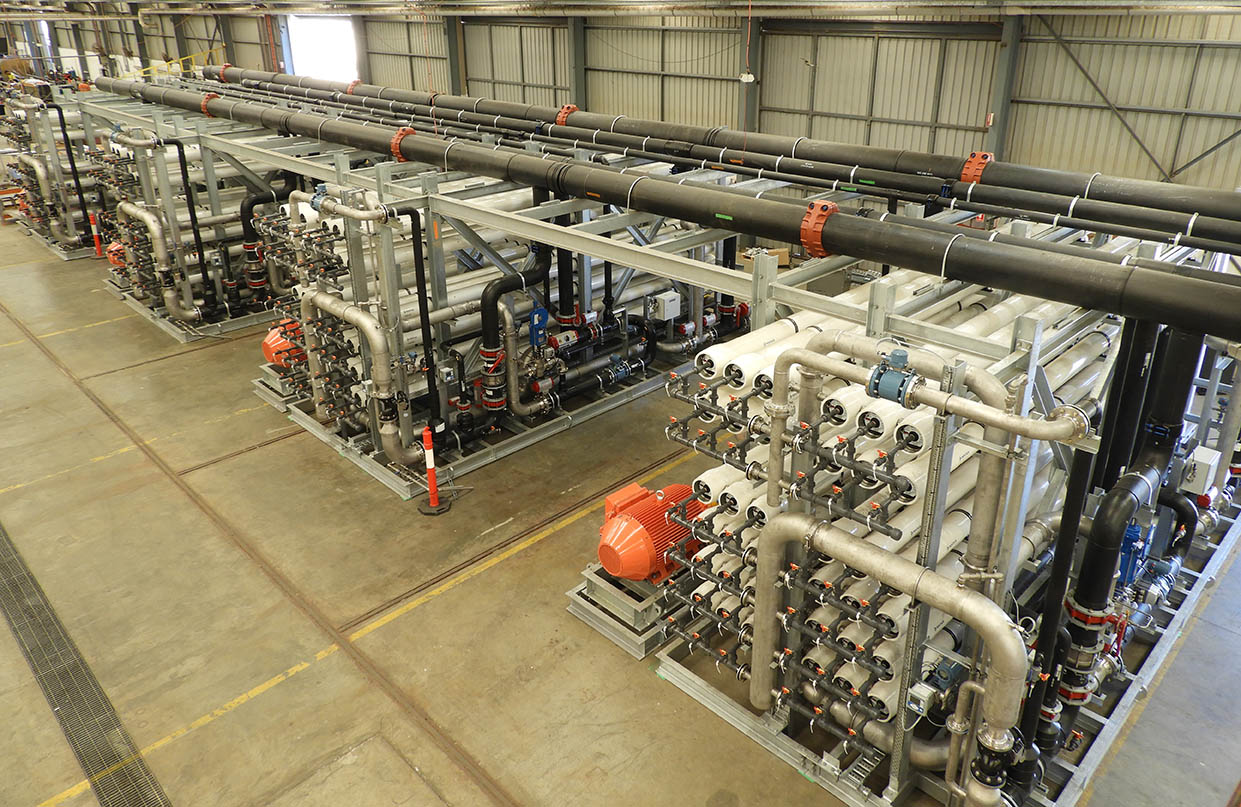
• Homepage Image 1
  • Capability to deliver plants up to 50ML/d

Osmoflo is the largest Australian owned desalination and water recycling company. Operating to world standards we are Australia's market leader in reverse osmosis desalination technology.
Home Coal Seam Gas
Home Emergency Water
Home Plant Operations

Clear Answers to Desalination

  • Understanding the quality of my water

    The key to efficient desalination using reverse osmosis (RO) is to understand the quality of the raw feed water that requires treatment. Water ain't water - it can differ greatly from one location to another. Salt and mineral content plus the level and types of contaminants can all vary dramatically. So the starting point for any RO desalination plant design is a complete and accurate water analysis. Understanding raw water quality is the key our designers need to unlock the right, most cost effective solution that can be deal with a specific client's raw water quality and meet project requirements.

  • What is reverse osmosis desalination?

    Desalination is the removal of salts from water. This is done by either reverse osmosis or flash distillation. Reverse osmosis (RO) involves the passing of feed water through a membrane under pressure. The salts are unable to pass through and are collected in a concentrated form. Treated water is known as permeate. The process can be repeated one or more times to further concentrate the brine and reduce the percentage of rejected concentrate water. In most applications reverse osmosis is the most efficient way of desalinating water.

    Flash distillation involves boiling off feed water and then collecting and condensing the steam which has left all impurities and salts behind. This process is highly energy intensive and is generally only used in applications where waste steam is available from industrial processes.

  • Getting the best efficiency

    Efficiency in overall performance begins with the right design from the start. In turn that means developing a full understanding of each client's needs taking in not just water quality, demand and ultimate use of the process water, but also how our equipment will integrate into systems already in place. Osmoflo's design engineers have the experience to know which parameters need to be considered and work closely with individual clients to develop the best design and the most suitable whole of life operations and maintenance regimes for each particular application, including the suitability of remote operation.

  • Energy efficiency in desalination

    There is general belief that reverse osmosis desalination is energy intensive. In reality, efficiency has improved substantially in recent years. Current generation membranes operate at far less pressure than previously and that in itself significantly reduces energy consumption. Simplicity in design and the right operations regime can further reduce energy consumption. Efficient design also includes the incorporation of energy recovery devices, such as turbines and pressure exchangers - common features on many Osmoflo plants. For large plants whose purpose is to service urban populations, the requirement to integrate green energy is often mandated during the early planning phase.

  • Achieving high recovery of water

    The key to achieving high recovery is efficient design, including incorporating the right pre-treatment technologies to properly condition feed water prior to feeding into the membranes. Experienced designers will recommend what pre-treatment techniques are required after consideration of raw (feed) water quality and application requirements.

    Many modern plants have a two-pass reverse osmosis process in which reject water from the first pass is further treated in a second stage to produce a brine concentrate that reduces the amount of reject water discarded in the desalination process.

  • The real cost of desalinated water

    The actual cost of desalinated water depends on a number of factors including raw and treated water quality and the final application. It is however a lot less expensive than most people believe. For example, desalinating a litre of sea water costs about the same in energy terms as the cost of electricity required to run a kitchen appliance such as a bar fridge, for an hour! The development of new long-life membranes which also require less chemical cleaning has also substantially reduced whole of life capital costs as does efficient operation.